Global projects demand materials that can survive changing climates, supply chains, and fabrication practices. 304 Ss Flat Bar remains a practical choice because it combines corrosion resistance, weldability, and broad market availability. Its nominal chemistry, commonly near 18% chromium and 8% nickel, supports a stable passive surface in many atmospheric environments. That matters on a coastal handrail, a food-processing frame, or a factory platform exposed to washdown water.
Industry data supports this wider relevance. The World Steel Association reported global crude steel production of approximately 1.89 billion tonnes in 2023, showing the scale of the international steel network. The International Stainless Steel Forum also continues to track strong global stainless steel demand across construction, manufacturing, and consumer equipment. These reports do not prove that every stainless grade fits every project. They do show a mature supply base, established processing knowledge, and dependable commercial access.
Standards remain essential. ASTM A276/A276M covers stainless steel bars and shapes, while ISO 9223 helps engineers assess atmospheric corrosion conditions. In practice, buyers should verify chemistry, mechanical properties, surface finish, and mill certificates before shipment. A bright surface is not proof of long-term performance. Chloride-heavy marine zones may require 316 stainless steel instead. That is the uncomfortable part. 304 Ss Flat Bar is versatile, but it is not universal. Engineers must compare exposure, load, fabrication methods, lifecycle cost, and local compliance requirements before approving a global specification. Small details decide large outcomes.
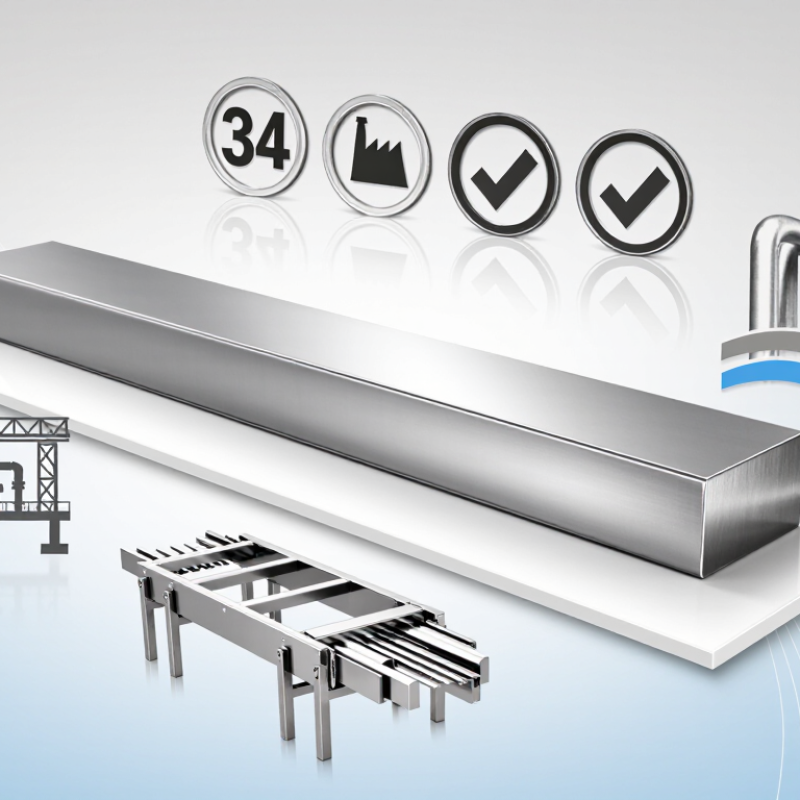
304 stainless steel flat bar is a solid, rectangular metal section made from Type 304 stainless steel. It typically contains about 18% chromium and 8% nickel. This composition creates a passive surface that resists everyday moisture, oxidation, and many mild chemicals.
The bar is available in different widths, thicknesses, lengths, and surface finishes. Common finishes include mill, brushed, and polished surfaces. Its flat profile makes it practical for frames, brackets, base plates, supports, trims, and general fabrication. It can be cut, drilled, bent, and welded with suitable equipment. Careful handling matters. Carbon-steel tools can leave particles behind and create misleading rust marks.
For global projects, 304 flat bar offers a useful balance of strength, appearance, availability, and fabrication cost. It performs well in kitchens, food-processing areas, architectural interiors, and ordinary outdoor structures. Still, it is not a universal answer. High chloride exposure, seawater, and warm chemical environments may require a more corrosion-resistant grade. Designers should check the actual atmosphere, loading conditions, finish, and applicable material standards before ordering.
One practical detail is often missed. A polished surface does not automatically improve the steel’s structural strength. It mainly changes appearance and cleanability. Thickness tolerance can also affect fit-up during assembly. A small mismatch may become a serious problem across a long frame. Specification review is worth the time.
304 SS flat bar suits global projects because its properties remain dependable across varied climates and fabrication methods. Type 304 typically contains about 18% chromium and 8% nickel, supporting a stable passive oxide layer. ASTM A276 specifies minimum tensile strength of 515 MPa and yield strength of 205 MPa for annealed Type 304 bar. These values support brackets, frames, supports, and general structural components.
Corrosion resistance is the practical advantage. The NACE IMPACT study estimated global corrosion costs at approximately 3.4% of worldwide GDP, showing why material selection deserves early attention. In coastal or humid sites, 304 performs well against ordinary atmospheric moisture, rain, and many food-processing environments. It also offers good weldability and can be cut, drilled, bent, or polished with widely available equipment. World Stainless reported global stainless steel production of about 58.4 million tonnes in 2023, indicating a mature international supply and processing network.
Still, 304 is not a universal answer. Chloride-rich seawater can cause pitting, especially around stagnant joints and weld discoloration. Project reviews often reveal this late. A molybdenum-bearing grade may be safer there. Surface cleaning, drainage, and correct fastener selection also matter. Material certificates should confirm chemistry, heat treatment, dimensions, and applicable ASTM or EN requirements before shipment. Forecasting everything is impossible; site exposure must remain part of the decision.
304 stainless steel flat bar performs reliably across many environments because its chromium content forms a protective passive layer. It resists moisture, indoor humidity, and moderate industrial exposure. In coastal locations, performance depends on salt concentration, cleaning routines, and sheltered design. Chlorides can cause pitting, especially around holes, welds, and tight joints. That risk is often underestimated.
In cold climates, 304 SS flat bar generally maintains useful toughness and does not become brittle like some ordinary steels. It also tolerates common processing methods, including cutting, drilling, and welding. However, heat tint and embedded carbon steel particles can reduce corrosion resistance after fabrication. A proper cleaning and passivation process matters. High temperatures deserve caution, too. Strength and oxidation resistance can decline during prolonged heating. This material is capable, not universal. That distinction should guide engineering decisions.
Tips: Confirm the environment before specifying the grade. Check chloride levels, temperature cycles, and contact with dissimilar metals. Use smooth surfaces where dirt may collect. Avoid stagnant water near joints. Inspect delivered bars for scratches, scale, and contamination. A simple site test can reveal more than a generic datasheet. One practical lesson is easy to miss: a strong material can still fail when drainage and maintenance are poorly planned.
Why Choose 304 SS Flat Bar for Global Projects?
International use depends on more than the label “304 stainless steel.” Project teams should define the governing standard before ordering. ASTM A276 commonly covers stainless steel bars, while ASTM A484 addresses general requirements, dimensions, tolerances, and testing. European projects may specify EN 10088-3, and Japanese projects may use JIS G4318. These standards are similar in purpose, but their acceptance rules can differ.
The purchase specification should state the grade, thickness, width, length, surface finish, and permitted tolerances. It should also identify whether 304 or 304L is required. The lower carbon content of 304L can reduce weld-related corrosion risks. However, it does not solve every service problem. Chloride exposure, high temperatures, and stagnant water still require careful assessment.
Ask for heat numbers and material test certificates, preferably with EN 10204 3.1 documentation when required by the project. Verify chemical composition, tensile strength, yield strength, and elongation against the selected standard. For a 100 mm wide bar, even a small thickness deviation can affect fit-up and load calculations. Surface condition matters too; a bright finish may look attractive but does not prove corrosion performance.
A common mistake is treating one certificate as universal approval. It is not. Some projects also require independent inspection, positive material identification, or country-specific customs documents. Requirements can change between design and shipment, so the specification should be reviewed again before fabrication.
International projects commonly reference ASTM A276, EN 10088-3, and JIS G4303 for 304 stainless steel long products. The chart compares published minimum mechanical requirements for representative 304 bar specifications.
Yield strength is shown as the minimum 0.2% proof strength, while tensile strength is the minimum specified value. Actual requirements can vary with product size, heat-treatment condition, and the exact edition of the applicable standard. Always confirm the purchase specification and mill certificate before international use.
Why Choose 304 SS Flat Bar for Global Projects?
Buyers should evaluate 304 stainless steel flat bar beyond its quoted price. Check the material test certificate, heat number, chemical composition, and mechanical results. Request positive material identification when the application is critical. Measure thickness, width, straightness, and edge condition from actual samples. A polished surface may look excellent, but it does not prove consistent internal quality. Ask how the supplier controls cutting accuracy and protects bars from carbon-steel contamination during handling.
Cost needs a wider calculation. Compare the landed price, including cutting, packaging, freight, duties, inspection, and possible scrap. A cheaper bar can become expensive after rework or delayed installation. I have seen buyers focus too heavily on unit price. That comparison was incomplete. Supply reliability also matters. Confirm available stock, production capacity, minimum order quantity, lead time, and replacement procedures. Ask for recent delivery records when the project schedule is tight. Packaging should prevent scratches, moisture exposure, and mixed bundles during long-distance transport.
Tips: Use a written inspection checklist. Match every batch to its certificate and purchase specification. Keep several approved supply options when schedules are demanding. Do not assume every “304” label represents identical quality. Small differences in tolerances, surface finish, and documentation can affect fabrication costs. Leave room for inspection time. Rushed approvals create avoidable problems.
| Evaluation Dimension | Key Data or Requirement | Buyer Evaluation Point | Project Relevance |
|---|---|---|---|
| Material designation | AISI 304 / UNS S30400; EN 1.4301 | Confirm the designation and applicable product standard on the purchase order. | Supports consistent technical comparison across international suppliers. |
| Typical chemical composition, % by mass | Cr: 18.0–20.0%; Ni: 8.0–10.5%; C: ≤0.08%; Mn: ≤2.00%; Si: ≤1.00%; P: ≤0.045%; S: ≤0.030% | Require a heat-specific mill test certificate and compare results with the ordered standard. | Chemistry controls corrosion behavior, weldability, and grade authenticity. |
| Minimum mechanical properties in annealed condition | Tensile strength: ≥515 MPa; yield strength: ≥205 MPa; elongation: ≥40% (ASTM A276 benchmark) | Check the exact standard, product thickness, test direction, and heat-treatment condition. | Indicates whether the bar can meet structural, fabrication, and forming requirements. |
| Density for weight calculation | Approximately 8.00 g/cm³, or 8,000 kg/m³ | Estimated mass = width × thickness × length × 8,000 kg/m³. | Improves freight planning, budget control, and quantity reconciliation. |
| Corrosion resistance | Good general atmospheric and water-service resistance; susceptible to chloride pitting and crevice corrosion. | Assess chlorides, salt spray, temperature, stagnant areas, and surface condition before approval. | Suitable for many architectural, food-processing, water, and general industrial applications, but not every marine or chemical environment. |
| Weldability | Generally excellent weldability using common stainless-steel welding processes. | Specify welding procedure, filler compatibility, heat input control, and post-weld cleaning. | Reduces fabrication risk and helps maintain corrosion resistance at welded areas. |
| Surface finish | Common finishes include hot-rolled, annealed and pickled, cold-drawn, brushed, and polished. | Define finish code, roughness requirement, allowable scratches, edge condition, and protective film needs. | Surface quality affects appearance, cleanability, corrosion performance, and processing cost. |
| Dimensional control | Specify width, thickness, length, flatness, straightness, squareness, and edge condition according to the selected standard. | Request inspection records showing actual measurements rather than nominal dimensions only. | Controls fit-up, cutting allowance, installation time, and material waste. |
| Applicable standards | ASTM A276/A479, EN 10088-3, or JIS G4318 may apply depending on product form and market. | Select one governing standard and avoid mixing chemistry, tolerance, and test requirements from different standards. | Creates a clear acceptance basis for projects involving multiple countries. |
| Quality documentation | Mill test certificate, heat number, chemical analysis, mechanical test results, dimensional report, and packing list. | Ensure every bundle and certificate can be traced to the same heat and production lot. | Supports inspection, customs clearance, audits, and nonconformance claims. |
| Cost structure | Total landed cost includes material price, processing, inspection, packaging, inland transport, ocean or air freight, insurance, duties, and taxes. | Compare equivalent specifications and use the same Incoterm, quantity, currency, and delivery basis. | The lowest unit price may not produce the lowest project cost. |
| Price volatility factors | Nickel and chromium input costs, energy, freight, exchange rates, order size, finish, and processing route. | Request quotation validity, surcharge basis, and price-adjustment terms in writing. | Helps protect budgets during long procurement cycles. |
| Supply and lead time | Lead time depends on stock availability, custom dimensions, finish, testing, production capacity, and shipping route. | Confirm production time, inspection time, dispatch date, transit time, and buffer for customs. | Reduces schedule risk for construction and equipment-manufacturing projects. |
| Packaging and shipping | Use dry, secure bundles with separators, edge protection, corrosion-resistant wrapping, and clear identification. | Confirm bundle weight, lifting points, package dimensions, marking language, and moisture protection. | Prevents transit damage, handling incidents, and identification errors at the job site. |
| Inspection and acceptance | Use visual inspection, dimensional inspection, certificate review, and sampling or third-party inspection when required. | Define sampling frequency, rejection criteria, corrective-action process, and claim period before shipment. | Moves quality control from reactive claims to documented project acceptance. |
| Application suitability | Often selected for supports, frames, brackets, architectural details, food equipment, and general industrial fabrication. | Verify structural design, temperature, chemical exposure, hygiene requirements, and local regulations. | 304 stainless steel is versatile, but application engineering should determine final grade selection. |
Its chromium and nickel content supports a protective passive layer. It suits brackets, frames, supports, and general structural parts. Supply and fabrication are widely available. Still, exposure conditions must guide the final choice.
Typical annealed material has about 515 MPa tensile strength. Its yield strength is approximately 205 MPa. These values support many light and medium-duty applications. Design loads still require professional checking.
It performs well in rain, indoor humidity, and ordinary atmospheric moisture. It also suits many food-processing environments. Smooth surfaces are easier to clean. Dirt buildup remains a problem.
It can work near the coast, but salt exposure increases pitting risk. Holes, welds, and tight joints may collect chloride deposits. Regular cleaning and good drainage help. Seawater exposure may require a more resistant grade.
It generally retains useful toughness in low temperatures. It is less likely to become brittle than many ordinary steels. Temperature cycling should still be reviewed. Cold alone is not the whole story.
Standard equipment can cut, drill, bend, weld, and polish it. Fabrication is practical across many workshops. Heat tint and contamination can reduce corrosion resistance. Cleaning and passivation after welding are important.
Prolonged high temperatures may reduce strength and oxidation resistance. The actual temperature and heating duration matter. Short exposure is different. Do not assume unlimited heat tolerance.
Check chemistry, heat treatment, dimensions, surface condition, and required documentation. Look for scratches, scale, weld discoloration, and embedded carbon steel particles. Confirm compliance with the project specification. A generic datasheet may miss site-specific risks.
Stagnant water, narrow joints, and poor drainage can concentrate corrosive deposits. Contact with dissimilar metals may create additional concerns. Use smooth surfaces where dirt collects. Material selection alone cannot fix bad maintenance.
304 Ss Flat Bar is a versatile stainless steel product made from the widely used 304 austenitic grade. Its balanced composition provides good corrosion resistance, strength, weldability, formability, and a clean surface, making it suitable for structural supports, frames, equipment parts, transportation systems, and architectural applications. These properties allow it to perform reliably in indoor environments, humid areas, kitchens, processing facilities, and many general outdoor conditions, although severe chemical exposure, high chloride levels, or extreme temperatures may require a different stainless steel grade.
For international projects, buyers should confirm dimensions, tolerances, surface finish, heat treatment, chemical composition, and mechanical properties against applicable standards and project specifications. Quality evaluation should include inspection documents, traceability, testing requirements, and consistency between production batches. Cost decisions should consider material grade, processing, packaging, transportation, import requirements, service life, and maintenance rather than purchase price alone. A dependable supply plan with clear documentation and realistic lead times helps ensure that 304 Ss Flat Bar meets both technical expectations and project schedules.

Oes Steel