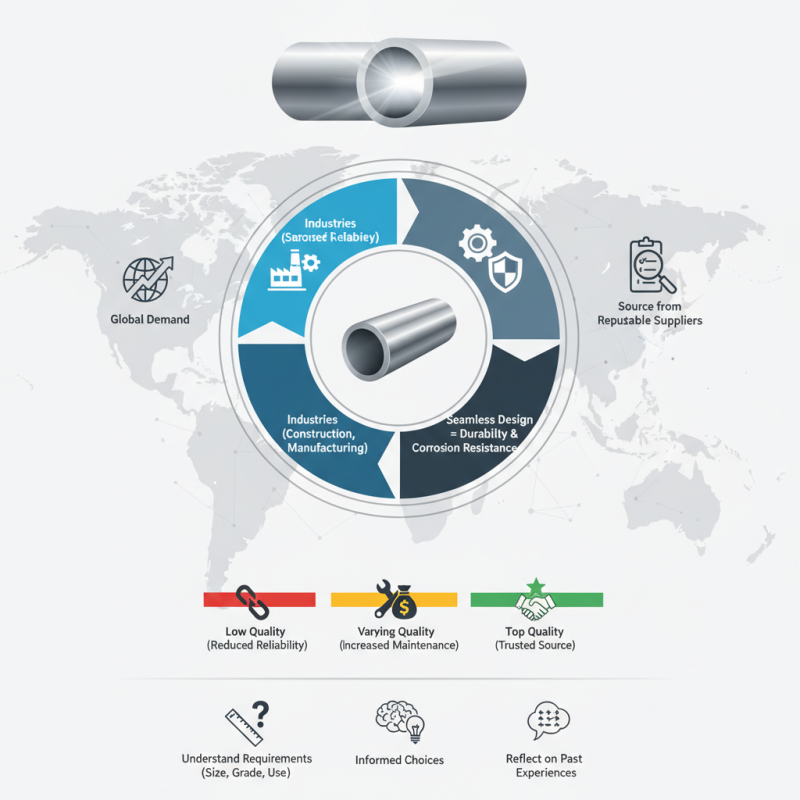
In the global marketplace, the demand for high-quality materials is ever-increasing. One such material that has gained prominence is the Seamless Stainless Steel Pipe. This product is essential in various industries, including construction, automotive, and manufacturing. Its seamless design ensures durability and resistance to corrosion, making it a preferred choice for many applications.
Experts emphasize the importance of sourcing these pipes from reputable suppliers. Quality can vary significantly among manufacturers. Some may cut corners, prioritizing profit over safety. This can lead to issues like reduced reliability and increased maintenance costs. Buyers must remain vigilant and prioritize finding trusted sources that uphold high standards.
Understanding specific requirements is crucial before making a purchase. Factors such as size, grade, and intended use play significant roles. Buyers should assess these needs carefully. Reflecting on past experiences with suppliers can also provide insights, highlighting the importance of making informed choices in today’s competitive landscape.
Seamless stainless steel pipes are a critical component in various industries. Their strength and resistance to corrosion make them ideal for challenging environments. According to a recent market report, the global market for seamless stainless steel pipes is expected to grow by 5.2% annually through 2028. This growth showcases their increasing importance in sectors like oil and gas, construction, and automotive.
One notable feature of seamless pipes is their manufacturing process. Unlike welded pipes, seamless pipes are created from solid rounds of steel. This method provides enhanced durability and reliability. Statistics reveal that seamless pipes have a higher pressure tolerance, making them suitable for high-pressure applications.
Tips: When selecting seamless pipes, consider factors like size, thickness, and material grade. Ensure you're sourcing from reputable suppliers. Always check whether the product complies with relevant industry standards. This will minimize the risk of material failures. In many cases, organizations overlook proper certification checks, leading to unnecessary project delays.
When it comes to seamless stainless steel pipes, key specifications and standards are vital for ensuring quality. Industry standards such as ASTM A312 and ASTM A269 provide clear guidelines. These standards outline the chemical composition and mechanical properties required. For example, pipes made under ASTM A312 must meet stringent tensile strength requirements of at least 70,000 psi.
The dimensions of these pipes are equally critical. For instance, the nominal pipe sizes must align with established standards to ensure compatibility across applications. The diameters often range from 1/8 inch to over 36 inches, with wall thickness varying significantly. Research shows that using pipes with precise dimensions can enhance performance and longevity.
Quality control measures should also be in place during production. Visual inspections, along with non-destructive testing, are essential to uncover defects. According to a recent report, nearly 15% of manufacturers fail to meet these quality checks. This could lead to catastrophic failures in critical applications. It is crucial for buyers to demand certification and testing results to ensure reliability in their purchases.
| Specification | Standard | Material Grade | Outer Diameter (mm) | Thickness (mm) | Length (m) | Finish |
|---|---|---|---|---|---|---|
| Seamless Pipe | ASTM A312 | 304 | 20 | 2 | 6 | Polished |
| Seamless Pipe | ASTM A213 | 316L | 25 | 2.5 | 6 | Pickled |
| Seamless Pipe | ASTM A789 | S32205 | 40 | 3 | 12 | Bright Annealed |
| Seamless Pipe | ASTM A270 | 304L | 50 | 4 | 6 | Electropolished |
The manufacturing process of top-quality seamless stainless steel pipes involves several crucial steps. It begins with the selection of high-grade raw materials. This choice affects the final product's durability and resistance to corrosion. The process continues with heating the metal in a furnace. Heat treatment is vital for achieving desired material properties.
During the extrusion phase, metal is forced through a die to form the pipe's shape. This step requires precision. Any failure here can lead to defects, making the pipe less reliable. Next, the pipes undergo a process called annealing. This heat treatment improves mechanical properties.
Tips: Always inspect materials before production. Quality control cannot be overlooked. Regular checks can save time and resources in the long run.
After shaping and treatment, the pipes are cooled and cut to specified lengths. Surface finishing follows for aesthetic appeal and enhanced corrosion resistance. Testing for pressure, durability, and density is essential. Without thorough testing, the integrity of the product remains uncertain.
Tips: Ensure proper documentation of each stage. This practice reinforces accountability and traceability. Address any inconsistencies promptly. Addressing issues early can prevent costly reworks.
The demand for seamless stainless steel pipes is rapidly increasing globally. Recent reports indicate that the market is expected to achieve a compound annual growth rate (CAGR) of 5.2% from 2023 to 2030. This surge is driven by the need for high-quality materials in various industries, including construction, automotive, and oil and gas.
One primary factor influencing this demand is the versatility of seamless stainless steel products. They offer high corrosion resistance, durability, and strength, making them ideal for critical applications. The rise in infrastructure projects worldwide is also contributing to increased usage. However, challenges exist, such as fluctuating raw material costs and varying quality standards across regions.
**Tip:** When selecting a supplier, consider their quality certifications and past performance. Reliable suppliers often provide consistent material standards.
Another trend is the growing emphasis on sustainability. Manufacturers are exploring ways to reduce the carbon footprint of production processes. Innovative techniques are emerging, aiming to minimize waste. Yet, many companies still face struggles in implementing these eco-friendly practices effectively.
**Tip:** Research the sustainability practices of potential suppliers. Transparent companies often share insights into their environmental impact.
When selecting seamless stainless steel pipes, various factors shape buyer choices. Quality assurance remains a primary concern for many. Pipes must meet industry standards to ensure durability and reliability. Factors like corrosion resistance, pressure ratings, and dimensions are critical. Buyers seek to understand these specifications thoroughly before making a purchase.
Tips: Consider getting samples before ordering large quantities. Testing small pieces can reveal any hidden flaws in the material.
Another influencing factor is supplier reputation. Experienced suppliers often have a track record of quality and service. Researching a supplier’s background is crucial. Customer reviews and testimonials provide insights into reliability. Some buyers may overlook this step, resulting in costly mistakes.
Understanding pricing structures is equally important. A higher price doesn’t always guarantee better quality. Buyers should analyze cost versus value effectively. Comparing multiple quotes can help identify competitive pricing while ensuring quality procurement.
Tips: Engage in discussions with suppliers to clarify any doubts. Clear communication can prevent misunderstandings and enhance the buying experience.
: They are crucial in industries like oil and gas, construction, and automotive due to their strength.
Seamless pipes are made from solid rounds of steel, enhancing durability and pressure tolerance.
Key factors include size, thickness, material grade, and supplier reputation to ensure quality.
Regular checks prevent defects that can lead to costly project delays and resource waste.
Always verify certifications and compliance before purchasing, as oversight can result in failures.
Research their reputation through reviews and ask for testimonials to gauge reliability.
Not necessarily. It's important to analyze cost versus value for effective purchasing decisions.
They need testing for pressure, durability, and density to ensure product integrity.
Consider ordering samples first to identify any hidden flaws in the material.
Clear discussions with suppliers can clarify doubts and prevent misunderstandings.
Seamless Stainless Steel Pipe is a crucial material widely used in various industries due to its strength, durability, and resistance to corrosion. This article provides an overview of seamless stainless steel pipes, highlighting their significance in construction and engineering. It discusses key specifications and standards that define high-quality products, ensuring reliability and safety for end-users.
The manufacturing process is examined, emphasizing techniques that contribute to top-quality seamless stainless steel pipes, including quality control measures. Furthermore, the article explores global market trends, revealing increasing demand driven by infrastructure development and industrial growth. Factors influencing buyer choices are also analyzed, including pricing, material quality, and compliance with international standards, which play a pivotal role in purchasing decisions.

Oes Steel