How to Select the Right 316 Stainless Steel Plate for Your Needs?

Time:2026-05-11 Author:Sienna
0%

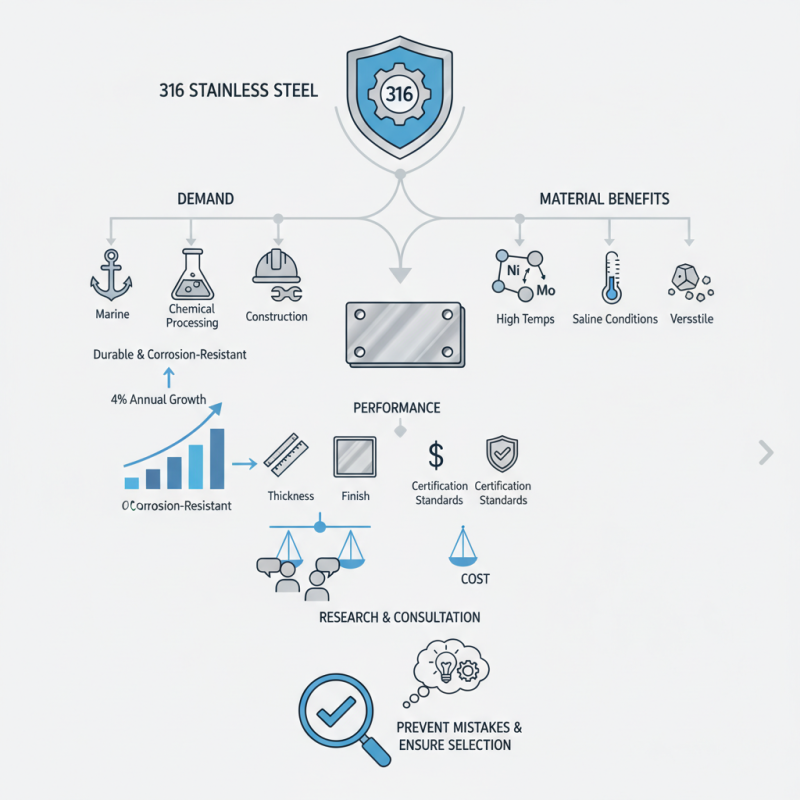
Selecting the right 316 stainless steel plate for your project is crucial. The demand for this material is rising, especially in industries like marine, chemical processing, and construction. According to a recent industry report, the global stainless steel market is expected to grow by 4% annually, driven by a need for durable and corrosion-resistant materials.

316 stainless steel plate offers exceptional resistance to pitting and crevice corrosion. It is versatile and suitable for extreme environments, including high temperatures and saline conditions. The material's nickel and molybdenum content enhances its strength and durability, making it a preferred choice for demanding applications.

However, not all 316 stainless steel plates are created equal. Factors such as thickness, finish, and certification standards impact performance and cost. Therefore, thorough research and consultation with experts are essential. Understanding these nuances can prevent costly mistakes and ensure the right selection for your needs.
How to Select the Right 316 Stainless Steel Plate for Your Needs?

Understanding the Composition and Properties of 316 Stainless Steel

When selecting 316 stainless steel plates, understanding their composition is essential. This material primarily includes iron, chromium, nickel, and molybdenum. The presence of molybdenum enhances corrosion resistance, making 316 an ideal choice for harsh environments. These plates often withstand saltwater, chemicals, and high temperatures.

The unique properties of 316 stainless steel are crucial for many applications. Its excellent weldability allows it to be shaped and joined effectively. However, its strength may vary based on the manufacturing process. There can be minor inconsistencies in composition across different batches. It’s important to check certifications before making a purchase.

Choosing the right plate requires balancing specific needs with its properties. Analyze the environmental factors your project may face. Corrosive elements can lead to failure if not properly considered. Remember that while 316 is durable, evaluating alternatives could sometimes be beneficial. Always reflect on your project's requirements before finalizing your decision.

Mechanical Properties of 316 Stainless Steel

Assessing the Applications and Uses of 316 Stainless Steel Plates

When choosing 316 stainless steel plates, understanding their applications is essential. This versatile material finds use in various industries. For instance, marine environments benefit greatly from its corrosion resistance. It is commonly used in boat fittings and pipelines. Additionally, 316 stainless steel's high-temperature resistance makes it suitable for chemical processing. In food and beverage industries, it is preferred for its hygienic properties.

**Tips**: Consider the environment where the plate will be used. Will it face harsh chemicals or salty water? Evaluate the specific requirements of your project. Thickness and finish can significantly impact performance.

As you assess your needs, think about the long-term implications. Using the wrong type of stainless steel could lead to costly replacements. Some may overlook the importance of welding characteristics. Not all grades are easy to weld. Reflecting on these aspects can save time and resources in the future.

Evaluating Thickness and Dimensions for Specific Requirements

When selecting a 316 stainless steel plate, evaluating thickness and dimensions is crucial. The thickness affects strength and durability. A thicker plate may be required for heavy-duty applications. Conversely, thinner plates can be appropriate for lighter uses. Knowing the specific needs of your project helps in making this choice.

Dimensions also play a significant role in performance. Plates that are too large might be challenging to handle. On the other hand, plates that are too small may not meet requirements. It's important to measure the space accurately where the plate will be installed. Considering tolerances is vital as well. Small variations can impact the overall fit.

In some cases, there might be uncertainty about the right thickness. Seeking expert guidance can provide clarity. Always ensure that you have enough information before making a selection. Reflecting on past projects can also offer insights. Learning from previous mistakes will help in future decisions.

How to Select the Right 316 Stainless Steel Plate for Your Needs?

Thickness (inches) Width (inches) Length (inches) Weight (lbs) Ideal Applications
0.125 48 96 50.40 Marine Components
0.250 36 72 56.40 Chemical Equipment
0.375 60 120 94.50 Structural Applications
0.500 48 96 78.00 Food Processing
0.625 30 72 62.25 Pharmaceutical Applications

Identifying Quality Standards and Certifications for Stainless Steel

When selecting 316 stainless steel plates, understanding quality standards is crucial. There are multiple certifications that ensure the material's reliability. Look for certifications like ASTM, ASME, or ASTM A240. These standards govern the chemical composition and mechanical properties, ensuring long-lasting performance.

Quality does not always equal compliance. Some suppliers may provide plates labeled as 316 steel but lack verified certifications. This could lead to unexpected challenges. Inspecting mill certificates can reveal the actual makeup of the steel. It’s essential to demand transparency in the materials you're purchasing.

Additionally, consider third-party testing reports. They offer an unbiased look at the steel's performance. Relying solely on a supplier's claims can be risky. Authentic certifications provide a level of assurance that is hard to overlook. Always question claims that seem too good to be true. It’s wise to take the time for proper vetting.

Choosing a Reliable Supplier for 316 Stainless Steel Plates

Selecting the right supplier for 316 stainless steel plates is crucial. The quality of the plate can vary significantly among suppliers. A recent industry report highlighted that up to 30% of stainless steel products may not meet the required standards. This makes it vital to choose a supplier with proven reliability.

Look for suppliers experienced in the industry. Those with a long-standing reputation often adhere to strict quality control measures. A supplier should provide certification showing compliance with ASTM standards. Such documentation assures that the plates are durable and can withstand corrosive environments. It’s also wise to ask for samples. Seeing a product in person can reveal much about its quality.

Consider a supplier's sourcing practices too. Many rely on domestically sourced materials to ensure quality. In contrast, some may use cheaper international resources, increasing risks. Suppliers should be transparent about their sourcing. Don't hesitate to ask questions about their production processes. Clear answers indicate trustworthiness. If a supplier hesitates, consider it a red flag.

FAQS

: What materials are in 316 stainless steel?

: It mainly comprises iron, chromium, nickel, and molybdenum.

Why is molybdenum important in 316 stainless steel?

Molybdenum enhances corrosion resistance, making it suitable for harsh conditions.

Can the strength of 316 stainless steel vary?

Yes, strength can vary based on the manufacturing process used.

Why is checking certifications important?

Certifications ensure the material meets quality standards and properties.

What quality standards should I look for in stainless steel?

Look for ASTM, ASME, or ASTM A240 certifications before purchasing.

Can suppliers mislabel their stainless steel plates?

Yes, some may claim to sell 316 steel without verified certifications.

How can I verify the quality of stainless steel?

Inspect mill certificates and seek third-party testing reports for assurance.

Is it always safe to trust supplier claims?

No, solely relying on supplier claims can lead to unexpected challenges.

What should I consider before choosing 316 stainless steel?

Analyze environmental factors and potential corrosive elements for your project.

Should I always choose 316 stainless steel?

Consider evaluating alternatives based on your project’s specific requirements.

Conclusion

When selecting the right 316 stainless steel plate for your needs, it is essential to understand its unique composition and properties. 316 stainless steel is renowned for its excellent corrosion resistance and durability, making it suitable for various applications, including marine environments and chemical processing. Evaluating the thickness and dimensions of the plates is crucial to ensure they meet specific requirements for your project.

Furthermore, identifying quality standards and certifications ensures that you are selecting a product that meets industry benchmarks. Finally, choosing a reliable supplier for 316 stainless steel plates will guarantee that you receive high-quality materials, ensuring the success and longevity of your applications. By carefully considering these factors, you can make an informed decision tailored to your needs.


Sienna

Sienna

Sienna is a skilled marketing professional with a deep expertise in our company’s core products and services. With a passion for innovation and detail, she plays a pivotal role in crafting insightful blog posts that not only highlight the unique features of our offerings but also provide valuable......