How to Choose 8mm ID Stainless Steel Tube for Sourcing

Time:2026-09-13 Author:Henry
0%

Choosing an 8mm Id Stainless Steel Tube requires more than matching one measurement on a product page. The 8mm internal diameter may suit fluid lines, instrumentation, heat exchangers, or compact pneumatic systems. Yet wall thickness changes the outside diameter, weight, pressure capacity, and installation space. A small mismatch can disrupt an entire assembly.

In practical sourcing, buyers should confirm the actual internal diameter, material grade, temper, length, and dimensional tolerance. Stainless steel options such as 304 and 316 offer different corrosion resistance. Surface finish also matters. A bright, clean tube may be essential for visible equipment, while a smoother internal bore can reduce contamination and flow resistance. Ask for mill certificates, inspection records, and sample measurements. Do not rely on catalog photographs.

Details matter.

Supplier experience should be assessed through traceable production records, consistent packaging, and clear technical communication. For example, each tube bundle should protect the ends from dents, moisture, and metal debris. A reliable supplier should explain how the 8mm Id Stainless Steel Tube is drawn, welded, annealed, tested, and measured. Independent verification can strengthen confidence when tolerances are critical. However, documents alone do not guarantee performance. Sample testing may reveal surface scratches, ovality, or inconsistent wall thickness. This step is easy to overlook, especially when purchasing under time pressure. The best sourcing decision balances application demands, verified quality, delivery capability, and total cost. One assumption may still need review: nominal size is not always the usable size in practice.
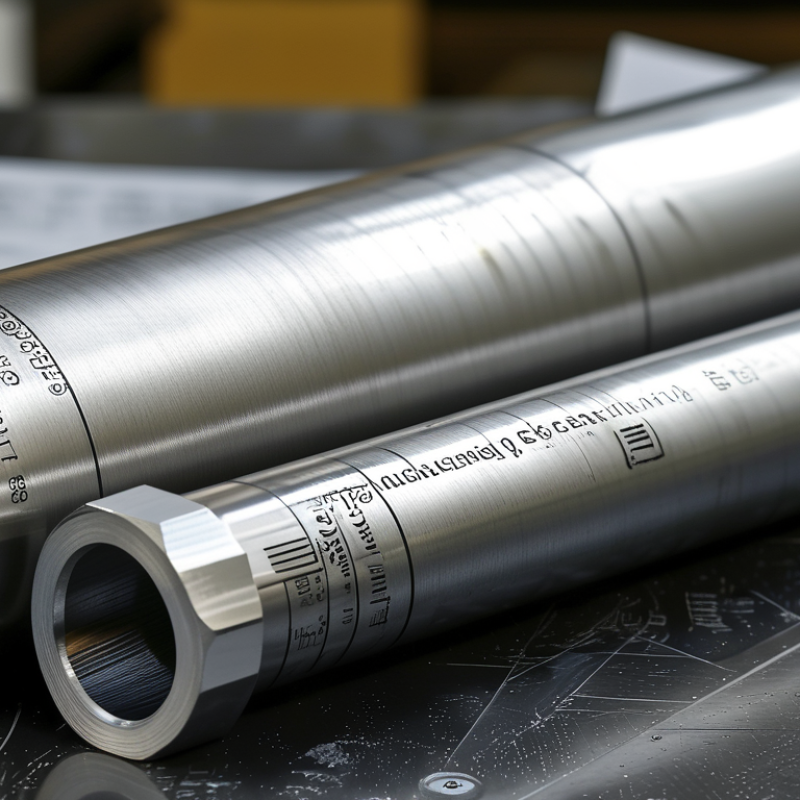
How to Choose 8mm ID Stainless Steel Tube for Sourcing

Understanding the Specifications of an 8mm ID Stainless Steel Tube

Choosing an 8mm ID stainless steel tube begins with its actual specifications, not its label. The inside diameter must be confirmed after drawing, polishing, or passivation. Wall thickness changes the outside diameter: a 1mm wall produces approximately 10mm OD, while a 1.5mm wall produces 11mm OD. Small differences matter.

ASME B36.19M mainly defines stainless pipe by outside diameter and wall designation. Therefore, an 8mm ID tube usually requires a custom dimensional check. Request ID, OD, wall-thickness, ovality, and length tolerances on the drawing. ASTM A269/A269M covers general-purpose seamless and welded stainless tubing, including inspection and mechanical requirements. ASTM A213/A213M is more suitable for high-temperature service. Do not assume one standard fits every application.

Grade selection also needs evidence. Type 304 suits many indoor and mildly corrosive environments, while 316L offers better resistance where chlorides may appear. The International Stainless Steel Forum reported global stainless crude-steel production of about 56.1 million tonnes in 2022, showing the scale of this supply chain, but production volume does not guarantee tube quality. Ask for chemical analysis, tensile results, hydrostatic or eddy-current testing, and an EN 10204 3.1 certificate. Surface roughness should be specified separately; “polished” is too vague. I would also verify pressure calculations with temperature, fluid, weld condition, and corrosion allowance. An attractive datasheet can still miss the detail that causes failure.

How to Choose an 8 mm ID Stainless Steel Tube for Sourcing

Understanding the Specifications of an 8 mm ID Stainless Steel Tube

The chart compares estimated stainless steel tube mass per metre at different wall thicknesses while maintaining an 8 mm internal diameter. Values are calculated from the tube geometry using a stainless steel density of 8.0 g/cm³. Increasing wall thickness increases the outside diameter, material usage, and handling weight. Confirm the required pressure rating, dimensional tolerance, surface finish, and stainless steel grade before purchasing.

Selecting the Right Stainless Steel Grade for Your Application

How to Choose 8mm ID Stainless Steel Tube for Sourcing

Selecting the right stainless steel grade starts with the working environment, not the tube diameter. An 8mm internal diameter suits compact fluid lines, instrumentation, and sampling systems. However, the grade must tolerate the fluid, temperature, pressure, and cleaning method.

For clean water, dry air, and mild indoor service, 304 stainless steel often provides practical corrosion resistance and good formability. Salt spray, chlorides, and coastal exposure create greater risks. In these conditions, 316 stainless steel offers stronger resistance because of its molybdenum content. For welded sections, 316L can reduce the chance of corrosion near heat-affected areas. That detail matters.

Corrosion changes everything.

When the fluid contains strong chemicals, high heat, or repeated cleaning cycles, a higher-alloy grade may be necessary. Do not select by alloy name alone. Check chemical compatibility data and request material certificates, hardness results, and dimensional inspection records. Confirm the actual 8mm ID after polishing or drawing, because wall thickness can affect flow and pressure performance. Seamless and welded tubes may behave differently during bending. Ask for surface roughness data when hygiene or low particle retention is important.

Field experience also shows that purchasing teams sometimes over-specify the grade. This raises cost without improving service life. The opposite mistake is more dangerous: choosing 304 for a chloride-rich application. Measure twice. Review operating changes, too. A tube may face a different fluid next year, and the original grade may no longer be suitable.

Checking Wall Thickness, Outer Diameter, and Dimensional Tolerances

When sourcing an 8 mm ID stainless steel tube, define the inside diameter clearly. Is 8 mm nominal, minimum, or measured after polishing? This detail affects fit, flow, and assembly clearance. Wall thickness also needs careful review because it directly determines the outer diameter. For example, an 8 mm ID tube with a 1 mm wall has a nominal 10 mm OD. That figure is only nominal. Request the supplier’s dimensional drawing before comparing quotations. It should show wall thickness, OD, ID, and permitted deviations.

Measure samples with suitable tools. Use a calibrated pin gauge for the ID and a micrometer for the OD. Avoid checking only one point. Stainless tube can show ovality, especially near the cut end. Rotate the tube during measurement and check several positions along its length. A clean surface does not prove accurate dimensions. Burrs can also make the ID appear smaller.

Dimensional tolerances must match the application, not simply look tight on paper. Check ID tolerance, OD tolerance, wall tolerance, roundness, and straightness separately. A tube may meet its OD requirement but fail the ID requirement. Ask for inspection records, material certification, and a defined sampling method. I would also confirm the measurement temperature, since precision parts can shift slightly with heat. Small sourcing oversights become expensive after installation. Rechecking the first sample is worth the delay.

Comparing Tube Finishes, Manufacturing Methods, and Quality Standards

How to Choose 8mm ID Stainless Steel Tube for Sourcing

An 8mm internal diameter is only a starting point. Confirm wall thickness, outside diameter, tolerance, and working pressure before requesting quotations. For clean fluid systems, welded tube usually offers lower cost and consistent dimensions. Seamless tube may suit higher pressure or demanding forming, but it often costs more. Manufacturing records should identify the heat number, solution treatment, and inspection method.

Finish affects both performance and maintenance. A bright-annealed surface gives a smooth appearance with limited oxide formation. Pickled and passivated tubing removes heat scale and supports corrosion resistance. Electropolishing can reduce surface roughness, useful for hygienic flow paths. However, a shiny surface is not automatically cleaner. Ask for roughness readings, such as Ra, rather than trusting photographs. ASTM A269 covers common austenitic stainless tubing requirements, while EN 10217-7 addresses welded tubes for pressure applications. Select the standard that matches the service, not merely the supplier’s catalogue.

Tips: Request samples cut from production material. Measure the 8mm ID at several points with a calibrated gauge. Check ovality, weld-bead condition, and burrs. The 2023 World Stainless report recorded about 58.4 million tonnes of crude stainless steel production worldwide, showing a broad supply base but uneven quality control. ISO 9227 salt-spray testing can help compare corrosion behavior, although it cannot fully predict field performance. I would also challenge overly perfect inspection claims; small sampling errors can remain unnoticed. Build acceptance criteria before comparing prices.

Evaluating Suppliers, Certifications, Pricing, and Delivery Requirements

How to Choose 8mm ID Stainless Steel Tube for Sourcing

Choosing an 8mm ID stainless steel tube requires more than checking the inner diameter. Confirm the outside diameter, wall thickness, grade, surface finish, and tolerance range. A tube can match the catalog size yet fail during assembly. Request a dimensional inspection report and a cut sample before approving production. In practical sourcing work, sample inspection often reveals rough edges, ovality, or inconsistent polishing.

Evaluate suppliers through traceable evidence, not attractive claims. Ask for material certificates, preferably EN 10204 3.1 documentation, heat numbers, and test results. Check whether the supplier controls forming, welding, cleaning, and final inspection internally. References from similar industrial applications can also support reliability. Still, certificates are not proof of every shipment. I once overlooked packaging quality, and surface scratches appeared after transport. That mistake deserved a stricter packing specification.

Tips: Compare at least three written quotations. Separate tube price, cutting fees, testing costs, packaging, and freight. Ask about minimum order quantity and replacement procedures. Confirm the delivery date in writing, including production and transit time. For urgent projects, request partial shipments or safety stock. Pricing should reflect total landed cost, not only the unit figure. A cheaper tube may create rework, delays, or rejected assemblies. Review payment terms carefully. Leave room for uncertainty. Supplier promises can change when raw material availability shifts.

How to Choose 8mm ID Stainless Steel Tube for Sourcing - Evaluating Suppliers, Certifications, Pricing, and Delivery Requirements
Evaluation Dimension Recommended Requirement Typical Benchmark or Reference Data Documents or Inspection Method Sourcing Decision Guide
Inside Diameter Nominal inside diameter of 8.00 mm Specify the allowable ID tolerance, measurement temperature, and whether the dimension is nominal, minimum, or controlled average. Calibrated plug gauge, air gauge, or internal micrometer; inspection report for sampled or 100% checked dimensions. Reject quotations that state only “8 mm tube” without defining ID tolerance.
Outside Diameter and Wall Thickness Select the wall thickness according to pressure, stiffness, weight, and forming requirements. 0.50 mm wall → 9.00 mm OD 1.00 mm wall → 10.00 mm OD 1.50 mm wall → 11.00 mm OD
OD = ID + 2 × wall thickness.
Outside micrometer, ultrasonic wall-thickness gauge, and dimensional inspection report. Do not compare prices until ID, OD, wall thickness, and tolerance are identical.
Material Grade Choose an austenitic or other stainless grade suitable for the service medium and temperature. Common options include 304/304L for general corrosion resistance and 316/316L where improved chloride and chemical resistance is required. Heat/lot number, chemical composition report, and positive material identification when required. Use 316L for higher chloride exposure; use 304L where service conditions and cost favor the standard grade.
Applicable Product Standard State the manufacturing and testing standard in the purchase specification. ASTM A269 is commonly used for general-service seamless and welded austenitic tubing; ASTM A213 is commonly used for seamless boiler, superheater, and heat-exchanger tubing. EN 10305-1 may apply to precision steel tubes. Certificate of conformity, manufacturing standard, test records, and independent dimensional inspection where appropriate. Require the supplier to quote the exact standard and edition rather than using “international standard” wording.
Manufacturing Method Identify seamless, welded, or welded-and-redrawn construction. Welded tube can be economical for many general applications; seamless tube may be preferred for demanding pressure, forming, or cleanliness requirements. Manufacturing route statement, weld inspection records, eddy-current or hydrostatic test results where specified. Match the production method to pressure, bending, cleanliness, and budget requirements.
Surface Finish Define internal and external finish, pickling, passivation, and roughness requirements. Typical commercial finishes include mill finish, polished finish, and hygienic finish. A surface roughness limit should be stated numerically when cleanliness matters. Surface-finish samples, roughness measurement, visual inspection, and passivation records. For fluid, food, pharmaceutical, or laboratory use, require documented internal cleanliness and finish criteria.
Dimensional Tolerances Control ID, OD, wall thickness, straightness, ovality, and cut length. Use the selected ASTM, EN, or project specification tolerance; tighter tolerances generally increase processing cost and inspection effort. Inspection plan, calibrated gauges, statistical sampling records, and final inspection report. Avoid unnecessarily tight tolerances because they can increase price and extend lead time.
Mechanical Properties Confirm tensile strength, yield strength, elongation, and hardness where required by the standard or application. Values depend on grade, product standard, heat treatment, and cold-working condition; use the selected standard’s minimum values rather than generic internet tables. Mill test certificate, tensile test report, hardness test, and heat-treatment record. Compare certificates against the exact grade and delivery condition specified in the purchase order.
Pressure and Temperature Suitability Provide design pressure, operating temperature, fluid, corrosion conditions, and safety factor. Allowable pressure depends on wall thickness, material strength, temperature, tube condition, joining method, and design code; an 8 mm ID alone is not sufficient for pressure selection. Engineering calculation, applicable pressure code, hydrostatic or pneumatic test record, and design review. Do not approve a tube based only on nominal size; obtain application-specific pressure validation.
Certification and Traceability Require traceability from supplied tube bundles or coils to heat and production lot. EN 10204 Type 3.1 provides inspection results issued by the manufacturer’s authorized inspection representative. ISO 9001 certification demonstrates a quality-management system but does not replace a material certificate. EN 10204 3.1 certificate, heat number, lot number, ISO 9001 certificate, and certificate validity check. Prefer complete heat and lot traceability for pressure, safety-critical, or regulated applications.
Indicative Price Structure Request a like-for-like quotation with material, size, finish, quantity, packaging, testing, and Incoterm separated. For small commercial quantities, stainless tube pricing is commonly quoted per kilogram or meter. A realistic comparison must include raw-material surcharge, conversion, testing, cutting, packaging, freight, and applicable duties. Itemized quotation, validity period, currency, Incoterm, surcharge basis, and freight breakdown. Use total landed cost, not the lowest unit price, when comparing offers.
Minimum Order Quantity Confirm minimum production quantity and minimum shipment quantity before technical approval. Stock lengths may have lower minimums; custom ID tolerances, special finishes, cut lengths, and non-standard grades may require a production batch. Written MOQ by size, grade, finish, and cut length; sample and pilot-order terms. Use stocked specifications for prototypes or low-volume demand; negotiate blanket orders for recurring demand.
Lead Time Separate sample, production, inspection, and transit time. Stock material may ship in days, while custom production commonly requires several weeks depending on tooling, mill schedule, testing, and quantity. Production schedule, confirmed ship date, capacity statement, and milestone plan. Require a committed date and escalation process rather than accepting an open-ended estimate.
Packaging and Protection Protect the ID and surface from moisture, contamination, impact, and deformation. Suitable controls may include capped ends, plastic sleeves, dry wrapping, bundle protection, corrosion-resistant paper, and seaworthy outer packaging. Packaging specification, photographs before shipment, packing list, and receiving inspection checklist. Specify packaging for the transport mode and storage period, especially for sea freight or humid environments.
Logistics and Delivery Terms Define delivery destination, Incoterm, transport mode, insurance responsibility, and required shipping documents. Common Incoterms include EXW, FCA, FOB, CIF, and DAP; responsibility for freight, insurance, export clearance, and import clearance differs by term. Pro forma invoice, commercial invoice, packing list, certificate of origin where needed, transport document, and insurance document if applicable. Compare delivered cost and responsibility under the same Incoterm and destination.
Supplier Quality Capability Evaluate process control, inspection resources, corrective-action response, and production capacity. Key indicators include documented inspection plans, calibrated equipment, nonconformance control, traceability, and repeatable delivery performance. Quality manual, audit questionnaire, sample inspection, nonconformance records, and reference delivery data without relying on brand names. Approve suppliers that can demonstrate repeatable evidence, not only a low quotation.
Sample and Pre-Production Approval Approve a representative sample before placing a full production order. Sample checks should cover ID, OD, wall thickness, grade, surface condition, straightness, cut length, cleanliness, and packaging. First-article inspection report, sample certificate, photographs, and signed approval record. Make the approved sample and specification the reference standard for mass production.
Warranty and Claims Define the inspection period, evidence required, replacement policy, and responsibility for nonconforming material. Use measurable acceptance criteria and a documented claim process covering dimensional defects, corrosion, surface damage, certificate errors, and quantity shortages. Purchase terms, inspection window, nonconformance report, photographs, test results, and corrective-action report. Prefer suppliers that commit to replacement or credit for verified nonconforming material.
Note: Final material selection, pressure rating, tolerances, testing, and compliance requirements should be confirmed against the applicable engineering code, product standard, and service conditions.

FAQS

What does an 8mm internal diameter actually mean?

It means the clear opening measures 8mm after drawing, polishing, or passivation. Confirm it with a dimensional report. Labels can mislead.

How does wall thickness affect the tube size?

A 1mm wall usually creates about a 10mm outside diameter. A 1.5mm wall creates about 11mm. Small differences matter.

Which dimensions should appear on the purchase drawing?

Include internal diameter, outside diameter, wall thickness, ovality, length, and tolerance ranges. Add surface roughness when cleanliness matters.

Which stainless grade suits mild indoor service?

Grade 304 often suits clean water, dry air, and mildly corrosive indoor conditions. It offers practical corrosion resistance and good formability.

When is 316L a better choice?

Choose 316L when chlorides, salt spray, coastal air, or welded areas create corrosion risks. Molybdenum improves resistance. It is not magic.

What should be checked for demanding fluids or temperatures?

Review chemical compatibility, temperature, pressure, cleaning cycles, weld condition, and corrosion allowance. A higher-alloy grade may be necessary.

How can a supplier’s quality be evaluated?

Request material certificates, heat numbers, tensile results, hardness data, and dimensional inspection records. Ask for a cut sample before production approval.

What should pricing and delivery comparisons include?

Compare at least three written quotations. Separate tube cost, cutting, testing, packaging, freight, and replacement terms.

Conclusion

Choosing the right 8mm Id Stainless Steel Tube requires more than matching the inner diameter. Start by confirming the required internal diameter, outer diameter, wall thickness, length, tolerance, pressure rating, and operating temperature. The stainless steel grade should suit the application’s corrosion exposure, strength requirements, hygiene expectations, and forming conditions. Common considerations include resistance to moisture, chemicals, heat, and repeated pressure or vibration.

Next, compare surface finishes and manufacturing methods, such as seamless or welded construction, based on performance and appearance requirements. Verify dimensional consistency, straightness, cleanliness, and applicable quality standards through inspection records and material certifications. When evaluating suppliers, review production capabilities, traceability, testing procedures, certifications, minimum order quantities, pricing, packaging, and delivery schedules. A reliable sourcing decision balances technical performance, total cost, and supply stability, ensuring the selected tube can be installed efficiently and perform consistently throughout its service life.


Henry

Henry

Henry is a dedicated marketing professional with a profound expertise in the company's offerings. With years of experience in the industry, he possesses an impressive understanding of the market dynamics and consumer behaviors that drive success. Henry is committed to sharing his insights through......