Global buyers need more than a bright surface when selecting a 304 Ss Rod. They need predictable chemistry, consistent dimensions, and evidence behind every claim. This guide examines the main 304 stainless steel rod types available in 2026, including hot-finished, cold-drawn, peeled, ground, and precision-machined forms. Each type behaves differently during turning, welding, polishing, and fabrication.
Harry Brearley, the English metallurgist credited with discovering stainless steel, reportedly described his invention as “a steel that did not rust.” The phrase remains memorable, but it needs context. 304 Ss Rod offers strong corrosion resistance, not complete immunity. Chlorides, stagnant water, poor cleaning, and high temperatures can still create problems. That detail is easy to overlook.
Experienced purchasers should compare ASTM or EN designations, diameter tolerance, surface condition, straightness, heat numbers, and mechanical test reports. A 20-millimeter cold-drawn rod may suit an automated shaft, while a hot-finished rod may be more practical for heavier machining. Mill certificates matter. So does supplier traceability.
This overview also considers regional naming differences, packaging, minimum order quantities, and export documentation. Small gaps can become expensive delays. Buyers should question impressive claims without test evidence. Even this guide has limits, because availability and specifications vary between mills and markets. The safest decision combines technical verification, application experience, and a supplier willing to explain what the material cannot do.
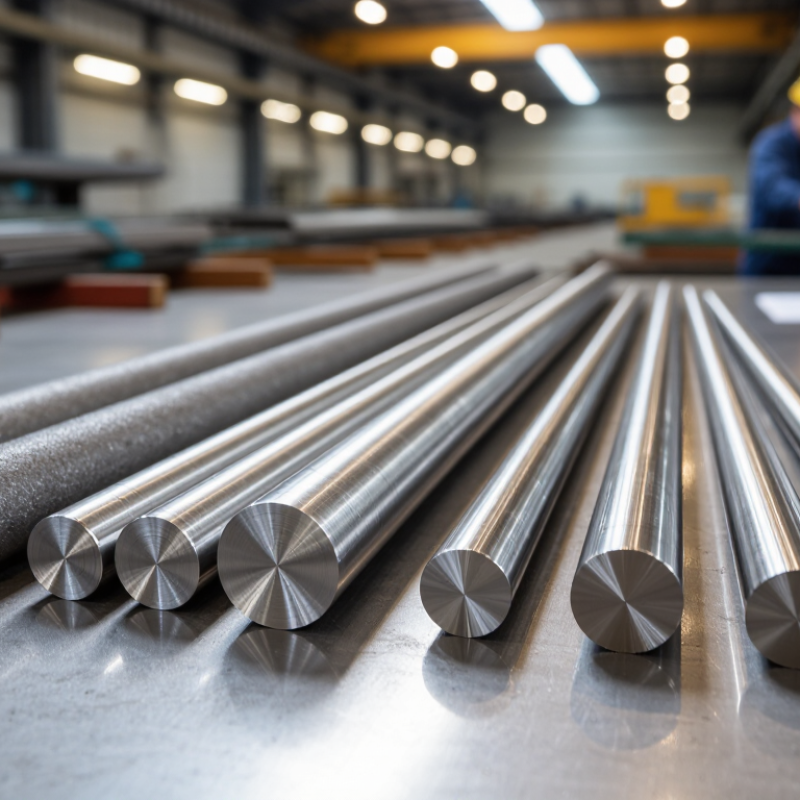
304 stainless steel rod is commonly identified as UNS S30400. Its defining chemistry includes 18–20% chromium and usually 8–10.5% nickel. ASTM A276/A276M covers many stainless steel bar and rod products, including this grade. Chromium forms a thin passive film, similar to an invisible glass shield. That film helps resist moisture, food acids, and ordinary atmospheric exposure.
The numbers matter during purchasing. Carbon is typically limited to 0.08% maximum, while manganese and silicon are controlled within specification limits. The U.S. Geological Survey’s Mineral Commodity Summaries 2025 reported roughly 41 million metric tons of chromite mine production worldwide in 2024. This supports chromium supply, but it does not guarantee consistent rod quality. Mill certificates still require careful review.
Common rod forms include bright drawn, peeled, ground, and hot-finished types. Drawn rod may show tighter dimensions and a smoother surface. Ground rod suits components requiring cleaner contact areas. A procurement engineer should verify diameter tolerance, straightness, surface defects, heat number, and tensile results. Small surface lines can become machining problems later. I have seen buyers focus too heavily on price. That is a mistake. Corrosion performance also depends on chloride exposure, polishing, fabrication, and cleaning practices. 304 is versatile, but not universal. High-chloride environments may require a more suitable grade.
For global buyers, 304 stainless steel rods offer a practical balance of corrosion resistance, strength, and machinability. ASTM A276 covers stainless steel bars and shapes, including common round, hexagonal, and square forms. Buyers should confirm the grade, diameter, length, tolerances, and required mechanical properties before placing an order.
Round rod is widely used for shafts, pins, supports, and general fabrication. Its smooth profile suits turning and drilling operations. Hex rod provides six flat surfaces for gripping, making it useful for fittings, spacers, and machined fasteners. Square rod offers firm edges for frames, brackets, and architectural details. Threaded rod requires extra care. The base material may meet ASTM A276, while thread dimensions, pitch, and end condition should be specified separately.
Check the mill test certificate carefully. It should identify chemical composition, tensile performance, heat treatment, and product dimensions. Surface inspection also matters, especially when rods will be exposed to moisture or cleaning chemicals. A bright finish is not proof of full compliance. This is an easy mistake. Confirm straightness, thread quality, packaging, and traceability with the supplier. In some projects, 304 may not resist chloride-rich environments adequately, so service conditions deserve honest review before approval.
Hot-rolled 304 stainless steel rods suit projects needing strength, volume, and practical pricing. They leave the mill with a rougher surface and wider dimensional variation. Their larger grain structure can support brackets, shafts, frames, and general fabrication. Buyers should check diameter tolerance, straightness, scaling, and heat-lot records. A rod may look acceptable but still require machining allowance. That detail is often missed.
Cold-drawn 304 rods receive additional forming at room temperature. This process improves surface smoothness, straightness, and dimensional control. It also raises strength through work hardening. These rods fit fasteners, machined parts, pins, and equipment components with closer size requirements. However, excessive forming can increase residual stress. Stress-relief treatment may be appropriate, depending on the final use. Not every “cold-drawn” rod has the same finish, so inspection language matters.
Precision 304 rods target tighter tolerances and consistent surface quality. They may involve centerless grinding, polishing, or controlled peeling after drawing. Such processing reduces material removal during machining and supports repeatable assembly. Ask for actual tolerance tables, surface roughness values, mechanical test results, and corrosion-related test evidence when relevant. Certification should match the order, not merely a standard template. In practice, buyers sometimes focus too heavily on bright surfaces. A bright rod is not automatically a reliable rod. Supplier audits, sample measurements, and traceable batch records remain useful, even when the first shipment appears perfect.
For global buyers, 304 stainless steel rods remain a practical choice for shafts, fasteners, food equipment, and fabricated frames. Their nickel content usually falls between 8% and 10.5%, supporting a stable austenitic structure and useful corrosion resistance.
ASTM A276/A276M specifies a minimum tensile strength of 515 MPa for common 304 bar products. That figure is a baseline, not a guaranteed working load.
Nickel also affects forming performance and low-temperature toughness. However, buyers should not judge quality by nickel content alone. Chromium, carbon, surface condition, heat treatment, and dimensional tolerance also matter.
World Stainless production statistics reported approximately 58.4 million tonnes of stainless steel production in 2023, showing the scale of demand for standardized grades. The report also reflects a market where supply consistency can vary by region.
A practical purchase specification should request heat numbers, chemical analysis, tensile results, and surface inspection records. Cold-drawn rods may exceed the 515 MPa minimum, but their elongation can decrease. That trade-off is easy to overlook.
In my experience, a polished surface can hide straightness problems, especially on longer rods. Independent testing is sensible for safety-critical parts, even when the mill certificate appears complete. Temperature, machining direction, and actual service chemicals may also change the result.
For global buyers, 304 stainless steel rods require more than a familiar grade name.
The International Stainless Steel Forum reported approximately 58.4 million tonnes of global stainless crude steel production in 2023. This scale increases supply options, but also increases document and quality variations. Buyers should specify ASTM A276 or EN 10088-3 before requesting quotations.
ASTM A276 covers hot-finished and cold-finished stainless bars, including 304 grades, with requirements for chemistry, mechanical performance, and surface quality. EN 10088-3 identifies 304 commonly as 1.4301 and defines technical delivery conditions for bars and related products. The standards are not interchangeable in every detail.
A purchase order should state the standard, grade, finish, straightness, cut length, and diameter tolerance. Common requests range from 3 mm precision rods to 300 mm heavy sections, although mill capability controls availability.
Size confusion is expensive. “Rod” may describe a round bar, but buyers should confirm whether it is bright drawn, peeled, ground, or hot rolled. Require a material test certificate showing heat number, chemical analysis, tensile results, yield strength, elongation, hardness, and heat-treatment condition.
ISO 10474 provides widely used inspection-document guidance for metallic products. Still, a certificate alone does not prove every dimension. Independent verification can reveal packing damage, mixed heats, or inaccurate caliper readings.
That step feels excessive for small orders, yet one disputed batch can cost more than the inspection.
ASTM A276 covers stainless steel bars and shapes. It includes round, hexagonal, square, and some related forms. Buyers should verify the exact grade and product requirements.
Round rods suit shafts, pins, supports, turning, and drilling. Their smooth profile is easy to machine. They offer useful corrosion resistance, but not everywhere.
Hexagonal rods provide six flat gripping surfaces. They suit fittings, spacers, and machined fasteners. The flat sides can simplify holding during machining.
Square rods work well for frames, brackets, supports, and architectural details. Their firm edges help create stable joints. Sharp corners may need careful finishing.
Not necessarily. The base material may meet ASTM A276. Thread pitch, dimensions, length, and end condition should be specified separately.
Request the mill test certificate, heat number, chemical analysis, tensile results, and dimensions. Ask for heat-treatment and surface-inspection records when relevant. Traceability matters.
No. It is a minimum tensile-strength requirement for common 304 bar products. It does not define the permitted working load. Design calculations remain necessary.
Check diameter, length, straightness, surface condition, packaging, and thread quality. A bright finish proves little. Polished rods can still have alignment problems.
Sometimes, but not reliably in every chloride-rich service. Moisture, salts, temperature, and cleaning chemicals can change performance. This deserves an honest review.
Cold drawing may increase strength beyond the minimum requirement. It can also reduce elongation. That trade-off is easy to miss. Independent testing may be wise for critical parts.
304 Ss Rod is a widely used stainless steel product made from UNS S30400, valued for its balanced corrosion resistance, strength, and ease of fabrication. With approximately 18–20% chromium and 8–10.5% nickel, it performs reliably in construction, food processing, chemical equipment, and general engineering applications. Common shapes include round, hexagonal, square, and threaded rods, with dimensions selected according to design loads, machining needs, and installation requirements. Under ASTM A276, these rod types can be supplied for a broad range of structural and industrial uses.
Manufacturing methods influence the rod’s surface finish, dimensional accuracy, and mechanical performance. Hot-rolled rods are suitable for general-purpose applications, while cold-drawn and precision rods offer improved tolerances and smoother surfaces. Typical 304 stainless steel rod products provide a minimum tensile strength of about 515 MPa, subject to the applicable specification and condition. Global buyers should compare ASTM A276 with EN 10088-3 requirements, confirm sizes and tolerances, and request a material test certificate (MTC) covering chemical composition, mechanical properties, heat treatment, and traceability.

Oes Steel